Traditional Clothing in Tanzania – Culture, Styles & Meaning
Traditional clothing in Tanzania reflects the history, lifestyle, and creativity of different tribes. From the graceful kanzu to the colorful Maasai shuka, each attire tells a story. Safari experts suggest learning about local fashion for a meaningful connection with Tanzanian Culture. Whether on a safari or a cultural tour, Bestday Safaris allows you to explore the country’s rich indigenous heritage. We also ensure that visitors support community livelihoods by buying traditional clothes directly from locals, tailors, or local markets.
Traditional Clothing in Tanzania – Culture, Styles & Meaning
Traditional clothing in Tanzania reflects the history, lifestyle, and creativity of different tribes. From the graceful kanzu to the colorful Maasai shuka, each attire tells a story.
Safari experts suggest learning about local fashion for a meaningful connection with Tanzanian Culture. Whether on a safari or a cultural tour, Bestday Safaris allows you to explore the country’s rich indigenous heritage. We also ensure that visitors support community livelihoods by buying traditional clothes directly from locals, tailors, or local markets.
In this blog post, we will explore how East African traditions have influenced Tanzanian cultural clothing, uncovering what each piece represents.
Traditional clothing in Tanzania reflects the country’s rich cultural diversity, where every fabric, color, and design carries stories of heritage, identity, and generations of tradition.
Traditional Clothing Across Tanzanian Tribes
With over 120 tribes, each group has its own Tanzanian traditional dress. Locals express themselves through what they wear, echoing the phrase “Mavazi hufunza tabia ya mtu” (clothing shows someone’s behavior). As a visitor, you will notice Tanzanian fashion in daily life and village visits. Both men and women dress boldly — including bright colors, layered fabrics, and symbolic jewellery. This form of dressing ties people to their roots while still incorporating the modern world.
Some popular traditional attire includes:
The Maasai:
- Red shuka.
- Beaded jewellery.
- Sandals made from cow skin.
The Swahili:
- Kanga.
- Kanzu.
- Kofia.
The Chagga:
- Animal skin clothing.
- Headgear.
- Beads with symbolic color coding.
The Sukuma:
- Raffia skirts are worn during ceremonies.
- Dance costumes.
- Beads.
The Hadzabe:
- Animal skin clothing.
- Plant-fibre accessories.
The Swahili & Coastal Bantu:
- Kitenge.
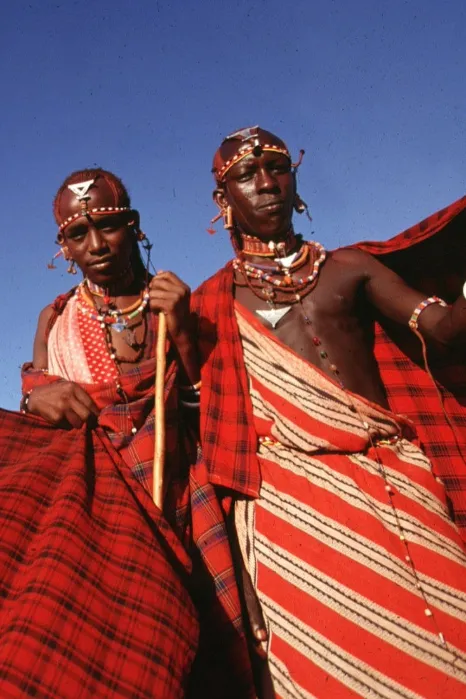
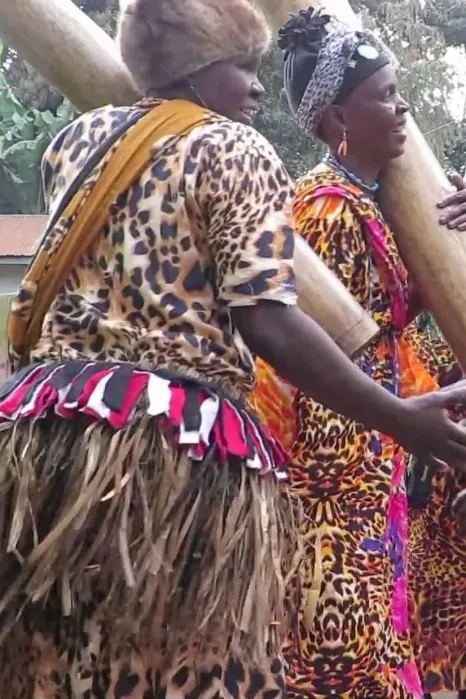
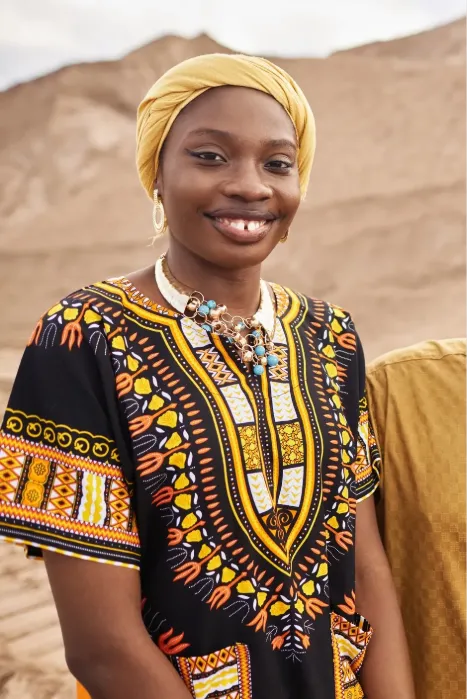
Cultural Experts highlight that customary clothing across Tanzanian tribes is more than just fabric. It is a powerful expression and continuation of identity, social status, and ancestral heritage. Even the youth still wear cultural clothing with a mix of trendy styles. They can either wear jeans with kitenge tops or sneakers with traditional prints. This helps preserve customs and acts as a “visual language” that teaches travelers about local values, history, and etiquette.
Maasai Clothing & Symbolism
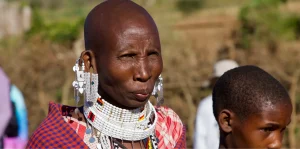
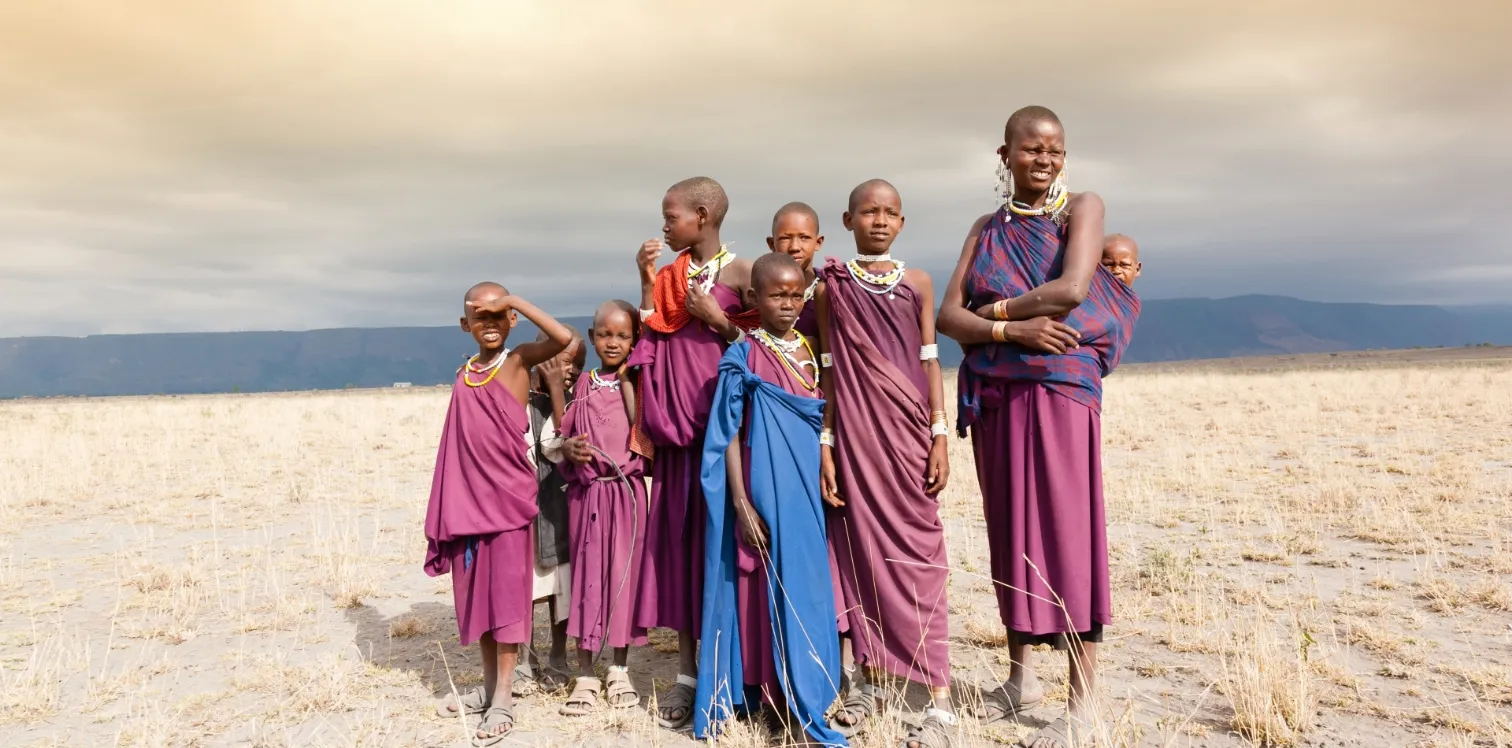
Maasai clothing is well recognized in Africa because of its vibrancy and accessory accompaniment. The community wraps red or blue shukas around their bodies, signaling cultural identity, gender, age, and social status. Women make beaded ornaments like bracelets, necklaces, and earrings. Each piece has its own meaning, with every color and pattern symbolizing marriage or personal breakthroughs.
Every color, bead, and fabric in Maasai clothing carries meaning, preserving stories of strength, unity, age, status, and traditions passed from one generation to the next.
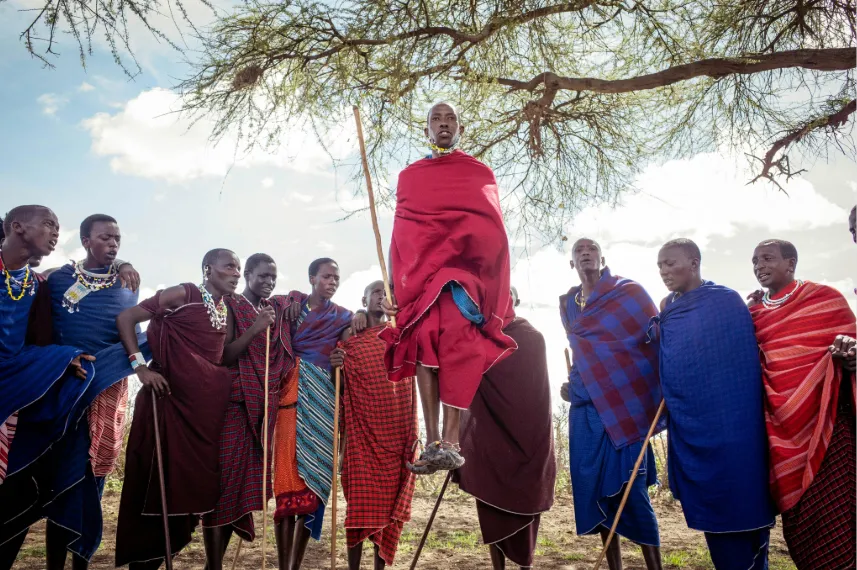
Maasai shuka and symbolism:
- Red (most popular): bravery, strength, and unity.
- Blue : the sky, water, and energy.
- Green : the land, health, and pastures.
- Black : endurance.
- White: peace and purity.
- Yellow: sun, fertility, and growth.
- Orange : hospitality, warmth, and friendship.
Bead color symbolism:
- Red & blue : relationship between people and Enkai (God).
- White & red : unity and peace between different clans.
Safari experts recommend visiting Maasai villages for a deeper cultural understanding of their attire. Locals share stories of their lifestyle, history, and customs, leading to insightful and genuine interactions. Remember to maintain respectful interactions to avoid any misunderstandings and to use operators that observe community-based tourism. This ensures the Maasai financially benefit from your visit.
Ready for a Maasai cultural tour adventure?
Contact our safari experts today for a meaningful and authentic experience.
Swahili Coastal Fashion Traditions
Tanzanian Swahili fashion combines elements of African, Arab, and Indian cultural traditions. In Tanzania, coastal fashion is seen everyday in Zanzibar Stone Town, where most Muslims live. Both men and women dress modestly, portraying humbleness, respect, and good morals.
The iconic Swahili clothes include:
- The Kanga (Leso) : Brightly-colored rectangular fabric with Swahili proverbs and messages printed on it. Also acts like a head wrap, shawl, skirt, or baby carrier.
- The Kitenge : A thicker fabric with floral prints tailored in dresses, skirts, blouses, and menswear.
Women’s attire:
- The Buibui : A light, black gown worn over kangas or kitenge dresses.
Men’s attire:
- The Kanzu : A long, white, flowing robe worn during formal events, weddings, and Friday prayers.
- The Kofia : A round cap paired with the Kanzu.
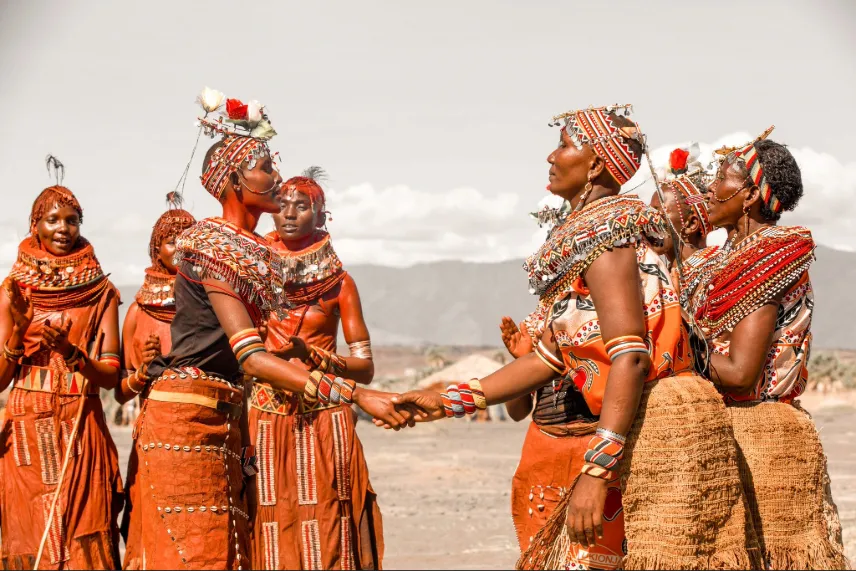
Swahili heritage experts explain that modern designers still use traditional foundations to make modest clothes. Especially in Zanzibar, light material is still used to ensure comfort, breathability, and protection from the humidity. Even today, the Swahili coastal fashion includes floral designs and specific colors that represent the lasting influence of the East African coast.
Modern Influence on Traditional Tanzanian Clothing
Tanzania’s modern fashion combines both Western and traditional styles. This allows locals to keep up with current trends and still preserve their traditions. In cities like Zanzibar, Dar es Salaam, and Arusha, travelers can shop from sewing workshops to local brands, and global designers like Nike.
The modern influence looks like:
- Kanga wraps and Kikoi clothes are paired with denim jackets, basic t-shirts, or modern blouses.
- Traditional skirts and dresses are being worn with casual sneakers.
- Local tailors use kitenge to make custom clothes.
- Western styles with African fabric.
- Modern cuts with cultural patterns.
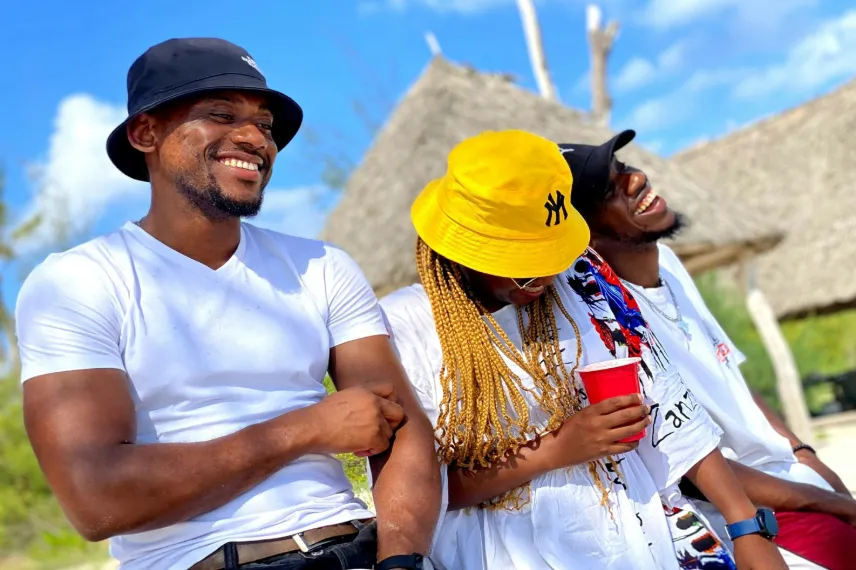
Fashion historians emphasize that this integration preserves the identity and deep meaning of traditional fashion. The modern influence has led to the famous event, Swahili Fashion Week, where Tanzanian models and tailors get to display their modern African looks. This has put Tanzania fashion in the spotlight, attracting global visitors.
The Meaning Behind Traditional Clothing in Tanzania
Tanzanian fashion is expressive, colorful, and proudly African. Every detail in clothing and jewellery, from the patterns to the color, echoes a strong cultural identity and creativity.
At Bestday Safaris, our cultural village visits allow you to see and even put on local attire. We pride ourselves on authentic interactions, creating unforgettable experiences.
Ready to experience Tanzanian fashion? Explore our Tanzania Safari Packages and cultural tours to experience Tanzania’s rich fashion heritage.

Plan a Trip to Tanzania
We offer different tour types. You can also chat with a local travel specialist if you want a customized tour to Tanzania.


Recommended by