Snow on Mount Kilimanjaro – Why It Exists Near the Equator
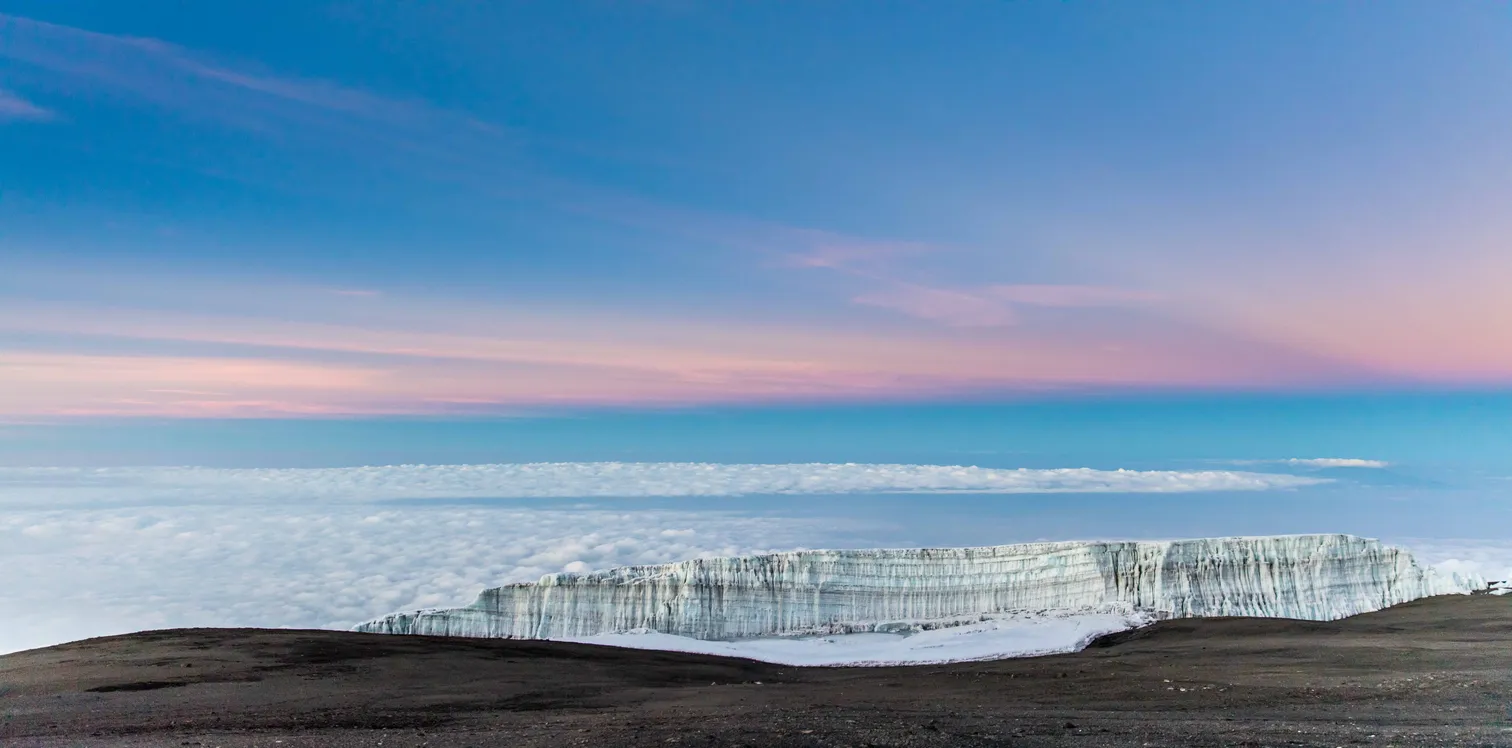
One of the most surprising facts about Africa’s tallest mountain is the snow on Mount Kilimanjaro despite its equatorial location. Located in the south, its height somehow influences the low temperatures that create snow and glaciers. This is a mystery that has many travelers and scientists wondering.
Snow on Mount Kilimanjaro – Why It Exists Near the Equator
One of the most surprising facts about Africa’s tallest mountain is the snow on Mount Kilimanjaro despite its equatorial location. Located in the south, its height somehow influences the low temperatures that create snow and glaciers. This is a mystery that has many travelers and scientists wondering.
At its peak lies the Arctic Summit Zone, which is completely different from the warm, tropical climate below. BestDay Safaris highlights that this is what makes Kilimanjaro one of the world’s most unique mountains. However, expert insights show that there will be no more glaciers by 2040. They are quickly melting because of high temperatures, deforestation, and changing weather patterns.
This guide explains why Kilimanjaro has snow, covering its five climatic zones and weather.
“Snow on Mount Kilimanjaro is proof that nature is unpredictable — even near the equator, altitude can create ice above the clouds.”
How Altitude Creates Snow on Kilimanjaro
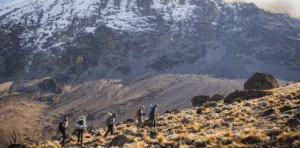
Uhuru Peak has snow because of its high altitude of 5, 895 meters that influences low temperatures of -9 °C. Before reaching here, hikers pass through the alpine desert zone that has scorching sun during the day and freezing temperatures at night. For every 1,000 metres climbed, a 6.5°C drop happens defining the Kilimanjaro Summit Weather as arctic.
Experienced Kilimanjaro Climbing Guides and mountain expertssuggest that the temperature changes on the mountain depend on altitude and time of day. The higher the altitude, the sunnier it is during the day and the colder it is at night. These Tanzania mountain facts are from geographical research, documented hiking experiences, and ecology.
Kilimanjaro’s Climate Zones Explained
Mount Kilimanjaro’s climate allows travelers to experience five different zones in one day. Each zone offers its own experience with different temperatures, landscapes, and wildlife presence.
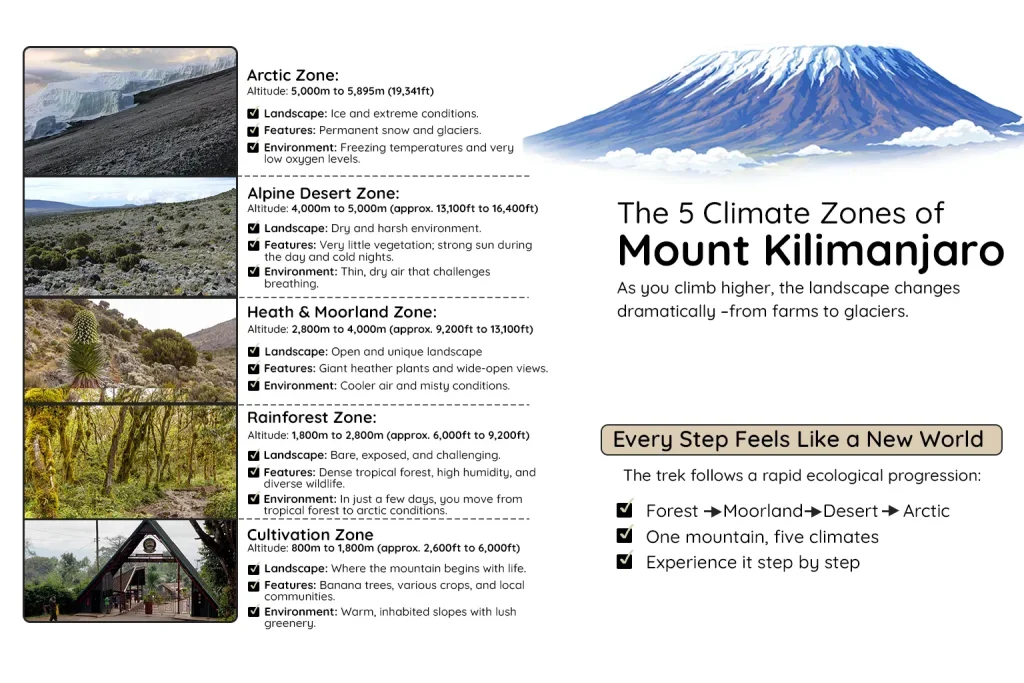
The 5 climate zones of Mount Kilimanjaro include:
Cultivation Zone
- Height: 800–1,800 m.
- Environment: The Chagga people live in the fertile volcanic plains that allow them to do coffee and banana farming.
- Weather: Has warm temperatures of 20°C to 30 °C.
Rainforest Zone
- Height: 1,800–2,800 m.
- Environment: Includes trees, ferns, and hanging moss that support different bird species and blue monkeys.
- Weather: Warm and rainy with temperatures of 20°C-25°C that increase humidity.
Heath and Moorland Zone
- Height: 2,800–4,000 m.
- Environment: Big, unique plants like groundsels and lobelias.
- Weather: Very sunny during the day and freezing cold at night.
Alpine Desert Zone
- Height: 4,000–5,000 m.
- Environment: Dry, moon-like lunar landscape with rocks, ash, and scree.
- Weather: Warm, sunny days and freezing nights.
Arctic Summit Zone
- Height: 5,000 m and above.
- Environment: Frozen moonscape with glaciers and snow fields that supports no animal or vegetation life.
- Weather: Very cold and windy with temperatures of -10°C to -20°C.
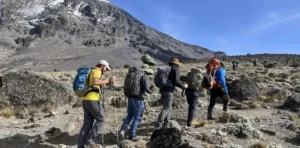
Real climbing experiences on Mount Kilimanjaro show thatthe higher you go, the cooler it becomes. As a result, body acclimatization is necessary to manage the temperature changes in every zone. Also note, you will be walking through muddy forest trails to strong summit winds. A slow pace handles these conditions well, increasing your chances of getting to the summit.
EXPLORE KILIMANJARO’S CLIMATE ZONES
Ready to experience the journey from the warm, lush surroundings to the cold, snow-capped Mountain? Contact us today for a professionally guided Kilimanjaro climb.
Kilimanjaro Glaciers and Climate Change
Kilimanjaro glaciers have existed since the last century. At that time, Uhuru Peak had bigger ice fields and non-disappearing glaciers compared to now. In 2026, more than 20% of glaciers have shrunk. This is because of rising temperatures that affect weather conditions. Indeed, Kilimanjaro is the best example of what global climate change does.
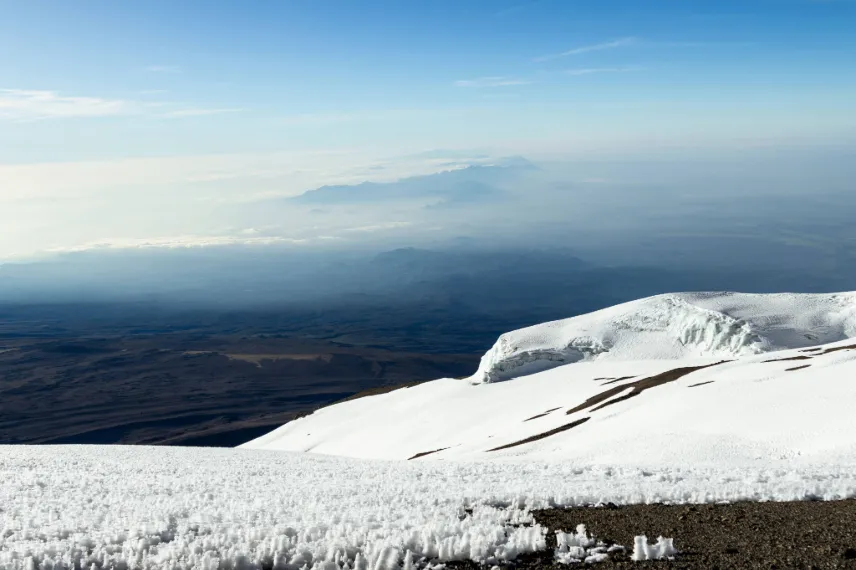
Human beings have also played a part in diminishing Kilimanjaro’s biodiversity. Through cutting down trees, local water levels have reduced leading to lack of rain. Research on Kilimanjaro’s unique ecosystem is still ongoing to determine how high temperatures affect high-altitude mountains.
What Trekkers Experience Near the Summit
Trekkers are met with cold and thin air at the alpine desert zone. High endurance is necessary as the final push to the summit begins at 12 AM. Once at the summit, they are met with fulfilling, beautiful sunrises that make it all worth it.
“Near the summit, every breath feels heavy, and every step feels personal. Trekkers not only discover the top of the mountain but also a quieter understanding of themselves.”
What to expect:
- Snowfall at high altitude.
- Freezing temperatures.
- Summit sunrise.
- Thin air conditions.
- Layered clothing.
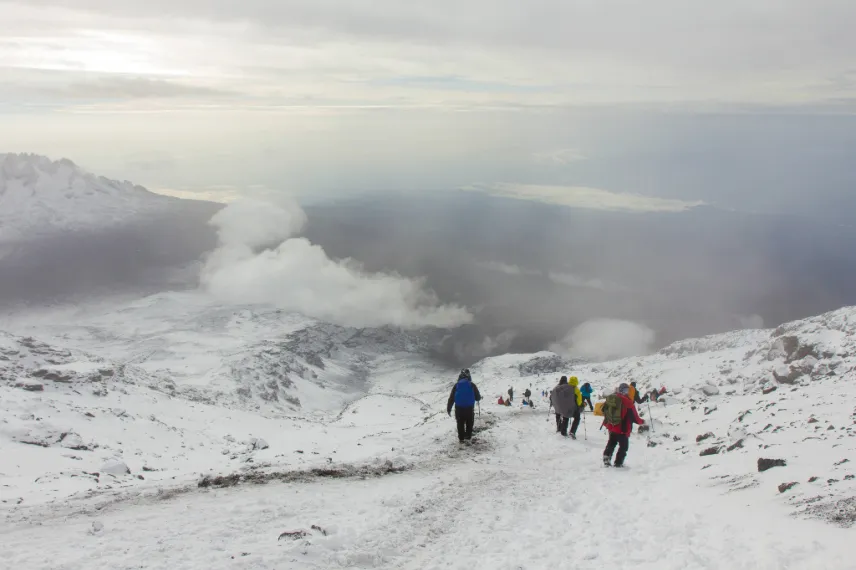
Climbing experts and mountain guides emphasize strategic layering, especially when near the summit. Your base layer should be wool material as it helps in absorbing sweat from the skin. The mid layer is important for trapping body heat that is used in the freezing thin air. Lastly, the outer layer protects you against extreme arctic winds, snow, and rain while remaining breathable.
Kilimanjaro’s Snow – A Rare Wonder Shaped by Altitude and Climate
Kilimanjaro’s snow is due to its height and cold temperatures at the summit. It also acts as a unique mountain ecosystem because of the five major climatic zones on earth.
At BestDay Safaris, we believe conservation awareness is necessary in protecting Mount Kilimanjaro for future generations. Our climbing packages are built on preservation standards to fight global climate effects and secure water supplies for local communities.
Ready for a safe, successful, and unforgettable Kilimanjaro climb? Explore our Kilimanjaro Climbing Packages and contact us today to experience the glaciers before they disappear.


Plan a Trip to Tanzania
We offer different tour types. You can also chat with a local travel specialist if you want a customized tour to Tanzania.


Recommended by